

I speak often with Kiwi entrepreneurs about their US strategy. I ask how they decided on the customers that they have, and the markets they serve.
The answer is almost always something like ‘I got a call from a potential customer in x…..’
If you answered this way, then your customer chose you, you didn’t choose your customer. Of course we all want to be chosen, ever since those high school dances, but in the business context it is better to choose your partners thoughtfully.
The same is true of customers, particularly when you are now playing in the big leagues for the first time. You need to be very conscious about how you choose your customers to make sure that you are staying within the parameters of your plan. You are targeting enterprise customers in the biotech space? Then the startup biotech in San Francisco will be a distraction from that mission. Not only that, but selling to enterprise customers is a completely different discipline from selling to small to midsize companies. By accepting business from a segment that is not on your playing field you will develop muscles that do not help you with your strategic vision.
You should also understand that enterprise size businesses in the US will sometimes choose smaller tech companies because they perceive that small companies will be more ‘flexible’ – (read: ‘easy to push around’). This type of customer will have lawyers that will insert all sorts of onerous terms into the contract (be particularly focussed on the termination and liability clauses) and will demand that you customize the product to their internal needs. They may even try to limit you from releasing those changes to other customers.
To make sure that you are choosing your customers consciously, you need to be clear about your strategy and target customers.
Start with a Lean Canvas one page business plan like this:
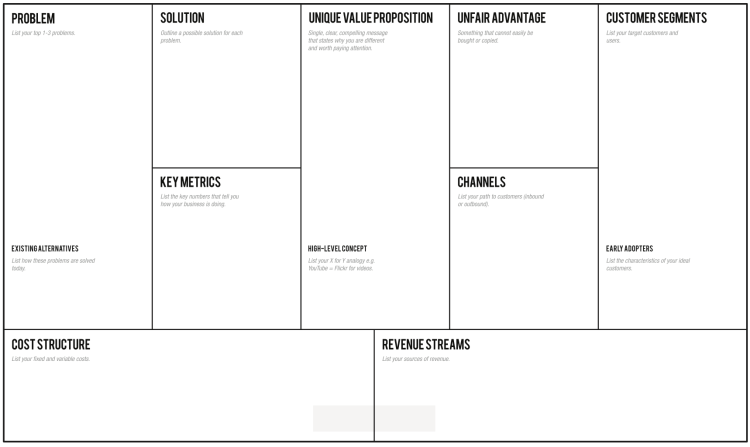
Go to leanstack.com for more information about how to use a Lean Canvas to define a plan on a single page. Ash Maurya is the author of books about running a ‘lean’ business.
With some careful thought, you can build a simple one-page plan (you may have a plan for each product or business unit), and doing so will help you communicate your vision to your team.
Most importantly though you can use this as a reference when a decision like ‘should we take on this customer’ comes along. The clear message here is, if the customer does not fit into section 1, and does not have the problem in section 2, and you cannot offer them something unique per section 3 – then you probably shouldn’t take this customer on.
They will thank you, your team will thank you and your investors will thank you (all probably much later, and only after some high alcohol drinks). But you will thank yourself immediately, and that is the most important thanks you will get.
 Hoboken Consulting